
Why Most Kenyan Small Businesses Struggle to Scale Past KES 500k/Month
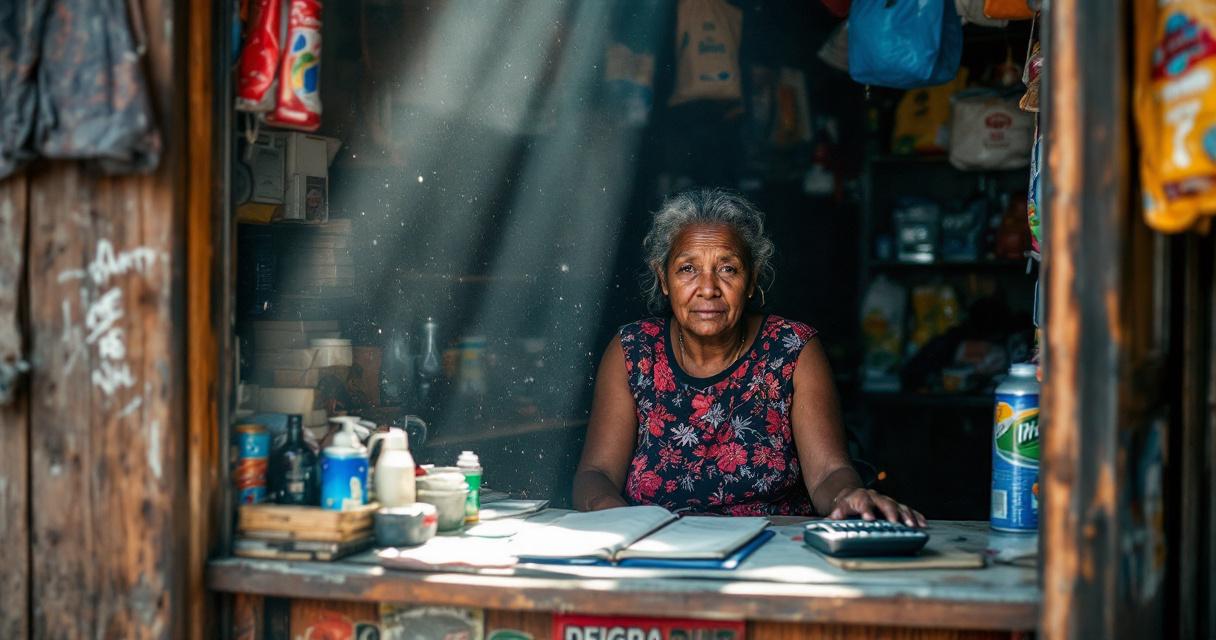
Why Most Kenyan Small Businesses Struggle to Scale Past KES 500k/Month
You hit KES 500,000 in monthly sales. Maybe KES 600,000 on a good month. And then you stall.
Six months later? Same number. A year later? You are working harder, not earning more. Something is broken, but you cannot figure out what.
This is the most common ceiling for Kenyan small businesses. Not KES 100,000. Not KES 1 million. Right at KES 500,000 — the point where what got you here stops working.
Why Is KES 500,000 the Magic Number?
At KES 100,000 to KES 300,000 a month, you can run things yourself. You take orders, you buy stock, you deliver, you collect payments. Your phone is your office. M-Pesa is your ledger.
At KES 500,000, the cracks appear. You have more customers than you can personally manage. Stock gets more complex. You start losing track of who has paid, who has not, and what is selling. You hire someone — a relative, a friend — but now you have a new problem: trust.
You cannot scale a business that still depends on you to answer every WhatsApp message, check every payment notification, and count every item in stock.
The Three Barriers That Keep You at KES 500k
1. You Are the Only Person Who Knows Everything
Look at your day. How many hours go to answering "Price is...?" messages? How many times do you stop restocking to check an M-Pesa notification?
At KES 500k, you are the bottleneck. Every question, every decision, every confirmation has to pass through you. That means you cannot do the high-value work — finding better suppliers, negotiating prices, planning which products to push next month.
Your business has grown faster than your systems. The solution is not to work harder. It is to build systems that work without you.
2. Your Stock Is a Black Box
The moment you stop tracking inventory accurately, your margins disappear. You run out of best-sellers on Friday night. You over-order slow movers because you guessed. You write off expired or damaged stock you forgot about.
At KES 500k, the cost of guessing is no longer small. A 10% stock loss on KES 500,000 is KES 50,000 — real money that could be your profit margin.
If you do not know how many units of each product you have right now, you cannot make good restocking decisions. And if you cannot make good restocking decisions, your growth stops.
3. Your Cash Flow Has No Buffer
Growth costs money before it makes money. To stock more, you need cash upfront. To hire help, you pay salaries before you see the revenue from that extra capacity.
Most businesses at KES 500k are running month to month. One slow week — a holiday, a funeral, a rainy season — and suddenly you cannot pay your supplier. That is not a problem at KES 100k. At KES 500k, it can break you.
What Breaking Through Looks Like
The businesses that grow past KES 500k do three things differently:
- They separate themselves from daily operations. They have a system for taking orders and confirming payments that does not require them to be on the phone at 11 PM.
- They know their numbers. Stock counts, cost of goods sold, gross margin per product — not guesses, actual numbers.
- They build a cash reserve. Even KES 30,000 in an emergency fund means a supplier order does not collapse because one customer paid late.
Scaling past KES 500k is not about getting more customers. It is about building a business that can handle the customers you already have without burning you out.
Your job should shift from doing everything to making sure everything gets done. That is the hard part. But it is also the only way past KES 500,000.