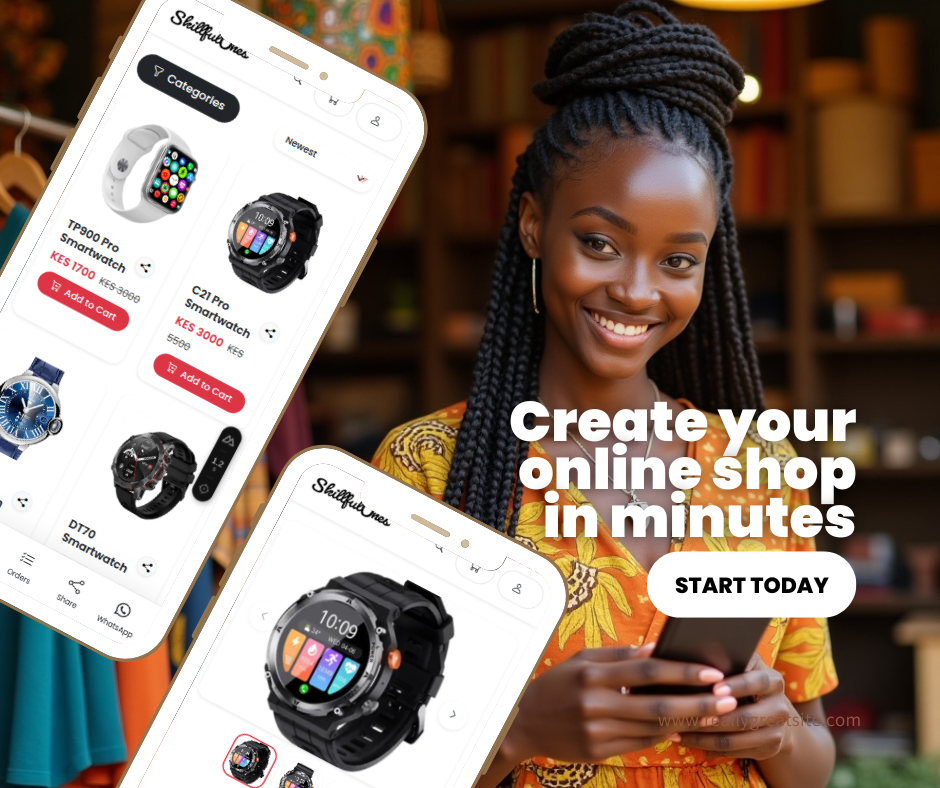
The M-Pesa Moment for Kenyan Ecommerce Is Here — and It Looks Like NeoMali

Kenyan merchants have spent years watching customers scroll past their Instagram pages, send a WhatsApp message, wait for a price quote, lose track of the conversation, and never buy. The problem is not the product. It is not the price. It is the system. M-Pesa solved how Kenya moves money. NeoMali is solving how Kenya sells. And the timing is exactly right.
The M-Pesa parallel Kenya already understands
Before M-Pesa, sending money in Kenya meant finding a trusted intermediary, traveling across town, and waiting days for a bank transfer. After M-Pesa, money moved in seconds. Kenyans did not need to understand mobile network infrastructure — they just needed to know the Till number worked. NeoMali brings that same simplicity to selling.
Just like M-Pesa changed how Kenya sends money without asking permission, NeoMali is changing how Kenyan retailers sell online. The Till number that M-Pesa gave every Kenyan shop became the default way to receive money. NeoMali is building the equivalent for every Kenyan seller who wants to receive orders — automatically, professionally, and without chasing anyone on WhatsApp.
What the M-Pesa moment actually looks like
M-Pesa did not win because it was the best-designed product. It won because it arrived at the right time and became the obvious default. When Safaricom made sending money as simple as entering a number, every other option became unreasonable. NeoMali is doing the same thing for online selling — making it absurd to run a business from a WhatsApp inbox when there is a system built specifically for the way Kenyan retailers operate.
The difference is stark. A WhatsApp seller manually sends their Till number, waits for a payment screenshot, confirms receipt, and then ships. A NeoMali seller sends their shop link, the customer pays via M-Pesa STK Push in one tap, and the seller receives an instant order notification — all without exchanging a single message. That is not an incremental improvement. That is a category shift.
Why this moment is different from past ecommerce attempts
Kenyan ecommerce has tried many things. Marketplace platforms promised global reach and delivered complexity. Custom-built online shops required technical skills and monthly maintenance fees. The result was a gap between what Kenyan sellers needed and what the tools actually did. NeoMali was built for exactly this gap — the space between having products and needing a system that works without a manual.
The infrastructure is ready. M-Pesa is deeply embedded in Kenyan daily life. Smartphone penetration is high enough that a Nairobi Instagram seller and an Eastleigh duka owner can both use digital payments without friction. The missing piece was not demand — it was the right tool. NeoMali fills that space with a platform that requires no credit card, no technical knowledge, and no waiting.
What changes when NeoMali becomes the default
When a platform becomes the default, everything else becomes the alternative. Kenyan sellers who discover NeoMali do not compare it to other platforms. They compare it to their current reality — the screenshots, the missed messages, the 11 PM sales they lose because a customer cannot reach them. The comparison is not even close.
NeoMali GO turns an Instagram profile into a 24/7 sales channel. NeoMali PRO-DUKA turns a physical duka into a digitally managed business. Both are designed around how Kenyan retailers actually work, not how a Silicon Valley startup imagined they should work. That local-first design is what makes the M-Pesa moment real.