
The Gift Shop Problem: Why Variety Can Actually Hurt Your Duka
The Gift Shop Problem: Why Variety Can Actually Hurt Your Duka
Most shop owners believe more products mean more customers. Here is the truth — and it is costing you money every single day.
Why Do We Keep Adding More Products?
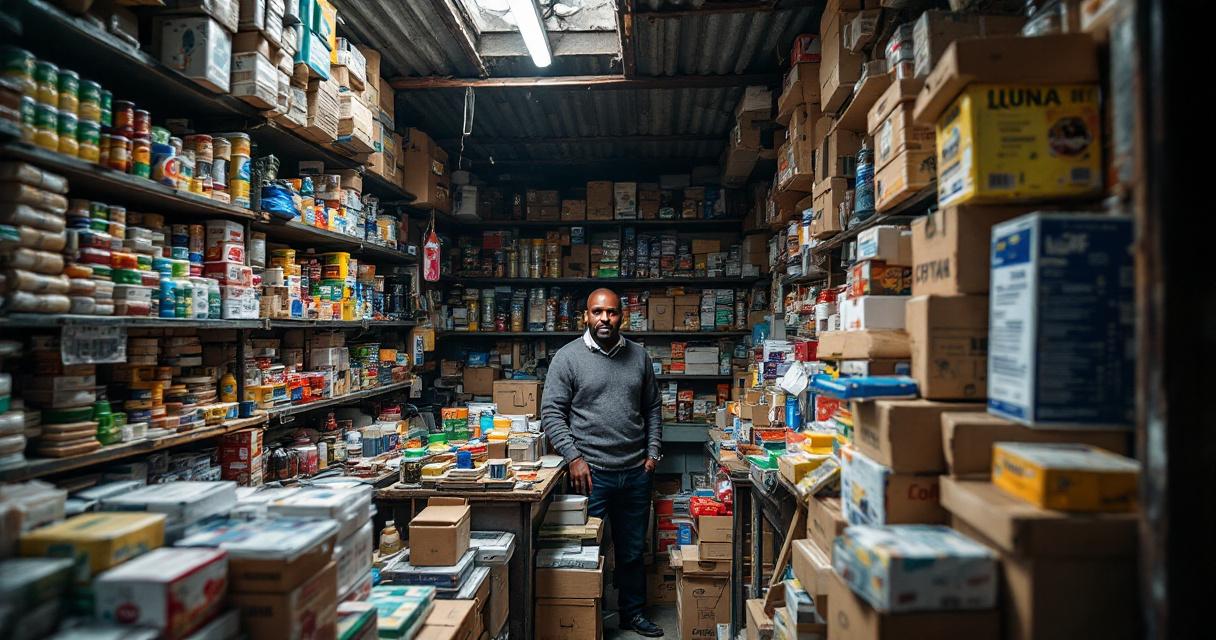
Walk into any duka in Eastleigh, Kawangware, or Mombasa and you will see the same pattern: shelves crammed with everything from cooking oil to phone chargers to biscuits to flip-flops. The logic seems solid — the more items you stock, the more customers will find what they need in your shop.
But here is what nobody tells you: every extra product you carry is costing you money even when it is not selling.
What Is Inventory Actually Doing to Your Cash?
Take a moment and look at your stock right now. Pick any shelf. How many items have been sitting there for more than two months? Three months? A year? That stock is not an asset — it is money you spent that has not come back.
Cash flow in a Kenyan duka works on a simple rule: you buy stock, you sell it, you get your money back plus a margin, and you buy again. Every item that does not sell breaks that cycle. Your cash is tied up, sitting on a shelf, gathering dust.
The Hidden Costs Nobody Talks About
Variety does not just tie up cash. It creates three invisible drains on your business:
- Rent wasted on slow stock. If 30% of your shelf space holds products that take three months to sell, you are paying rent for that space and getting almost no return.
- Mental load on you and your staff. Managing 300 different products takes more time, more counting, more decisions than managing 80 fast-moving ones. You cannot track what you cannot remember.
- Dead stock that expires or gets damaged. Crackers go stale. Cosmetics expire. Electronics get outdated. The longer something sits, the more likely it is to become a loss.
What Successful Dukas Do Differently
The shops that survive and grow do not stock everything. They stock what moves. Here is the simple system that works:
- The 80/20 rule. Identify the 20% of your products that generate 80% of your sales. Double down on those. Everything else is a candidate to drop.
- The two-month test. If a product has not sold in two months, stop ordering it. Clear what you have at cost or as a bundle and let it go.
- The one-in-one-out shelf rule. For every new product you bring in, remove one that is slow. This keeps your variety under control and your cash flowing.
How to Start Simplifying Tomorrow Morning
You do not need a spreadsheet or an MBA to fix this. Here is what you do:
- Walk around your duka with a notebook. Write down every product category you stock.
- For each category, ask: "Would my business survive if I stopped selling this?" If yes, start reducing it.
- For your top three categories (the ones that would hurt to lose), list your fastest-selling items. Focus your ordering budget on these.
- For everything else, run a clearance sale. "Buy two, get one free" or a flat 20% off. Get that cash back into your hands.
Real Numbers From a Real Duka
A friend who runs a duka in Umoja had 214 different products in a 10-by-12 foot shop. After tracking sales for one month, he found that 42 products — just 20% — accounted for 76% of his sales. The other 172 products were sitting there, tying up about KSh 180,000 in cash.
He cut down to 85 products. His monthly sales dropped by just 8% — but his cash flow improved by over KSh 150,000 because he was not constantly restocking slow items. He used that freed-up cash to open a second location six months later.
The Takeaway
Variety is not a strategy. It is a default. The moment you decide to stock fewer things and sell them faster, your duka becomes easier to run, your cash flows better, and you actually make more money. Start with one shelf tomorrow. The results will speak for themselves.