
Kenya Fintech Round-Up: M-Pesa Goes Beyond Payments, Kenswitch-Visa Team Up, and Uber Adds M-Pesa
M-Pesa launches stock trading, Uber adds M-Pesa payments, and Kenswitch-Visa upgrade Kenya payment infrastructure. What it means for your duka or online shop.
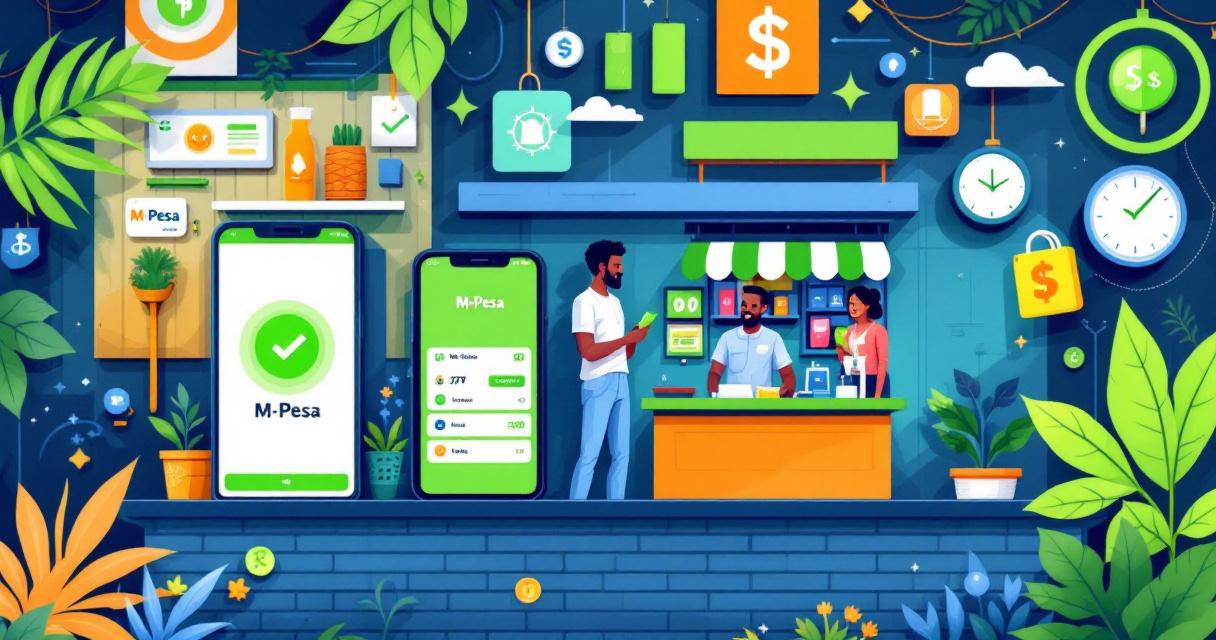
Kenya is having a big week in fintech. From M-Pesa launching stock trading to Uber adding M-Pesa as a payment option, the ecosystem is evolving fast. Here is what it means for small business owners and retailers.
M-Pesa Now Lets You Trade Stocks Directly from Your Phone
Safaricom has launched Ziidi Trader, a feature that lets M-Pesa users buy and sell stocks directly from their mobile money app. Announced at Safaricom Decode 4.0 on March 31, the service is being positioned as a way to bring investment opportunities to the millions of Kenyans who already use M-Pesa for daily transactions.
For dukas and small shops, this is significant for two reasons. First, it shows Safaricom is building M-Pesa into a broader financial platform — not just payments. Second, it means your customers may soon have more money流动性 and confidence in digital payments if they see their M-Pesa balance growing through investments.
Ziidi Trader is part of Safaricom broader ambition to merge M-Pesa and the MySafaricom app into a single super app called My OneApp.
Uber Now Accepts M-Pesa for Ride Payments in Kenya
Uber has introduced M-Pesa as a payment option for rides in Kenya, marking a significant expansion of the payment method beyond traditional ecommerce and person-to-person transfers. Ride-hailing has traditionally relied on cash or card payments in Kenya, leaving gaps for drivers who prefer mobile money.
For small business owners who double as Uber drivers, or who use ride-hailing for logistics, this is welcome news. M-Pesa payments eliminate the cash-handling friction that has long been a pain point for both drivers and riders.
Kenswitch and Visa Sign Deal to Modernise Kenya Payment Infrastructure
Kenswitch, Kenya local payment network operator, has signed a framework agreement with Visa to modernise the country payments infrastructure. The deal targets merchants, banks, and settlement systems, with the goal of making it faster and cheaper to process digital payments across the country.
For NeoMali merchants specifically, this could mean better payment processing reliability and potentially lower transaction costs in the future. Kenswitch operates the shared ATM network that connects many Kenyan banks, and its partnership with Visa signals a commitment to upgrading point-of-sale and online payment infrastructure nationwide.
Kenya Crypto Advertising Rules: What Freelancers and Small Traders Need to Know
Kenya financial regulators have issued new advertising guidelines for cryptocurrency businesses, with fines of up to $23,000 for rule breaches. The rules require crypto businesses to include disclaimers and avoid misleading claims about returns.
The regulations do not affect regular small business owners who are not in the crypto space. However, if you have been approached by crypto investment platforms to promote them on your social media, these new rules mean you should be careful about what you claim — both for legal reasons and because your reputation matters to your customers.
What This Means for Your Duka or Online Business
Three takeaways for Kenyan small business owners:
- M-Pesa is becoming a platform, not just an app. With stock trading, bill payments, and instant transfers, your customers are increasingly living their financial lives inside M-Pesa. Make sure your business is easy to pay through M-Pesa — NeoMali handles this automatically with STK Push checkout.
- Payment infrastructure is improving. Deals like Kenswitch-Visa signal investment in better merchant payment systems. Over time, this should mean fewer failed transactions and faster settlement for businesses selling online.
- Digital payment options are multiplying. From Uber adding M-Pesa to new cross-border payment tools, the ecosystem is expanding. A multi-payment strategy — where you can accept M-Pesa, cards, and other methods — will become increasingly important as customer expectations evolve.